LLM Inference Optimization Part 1 — Attention Mechanism Deep Dive
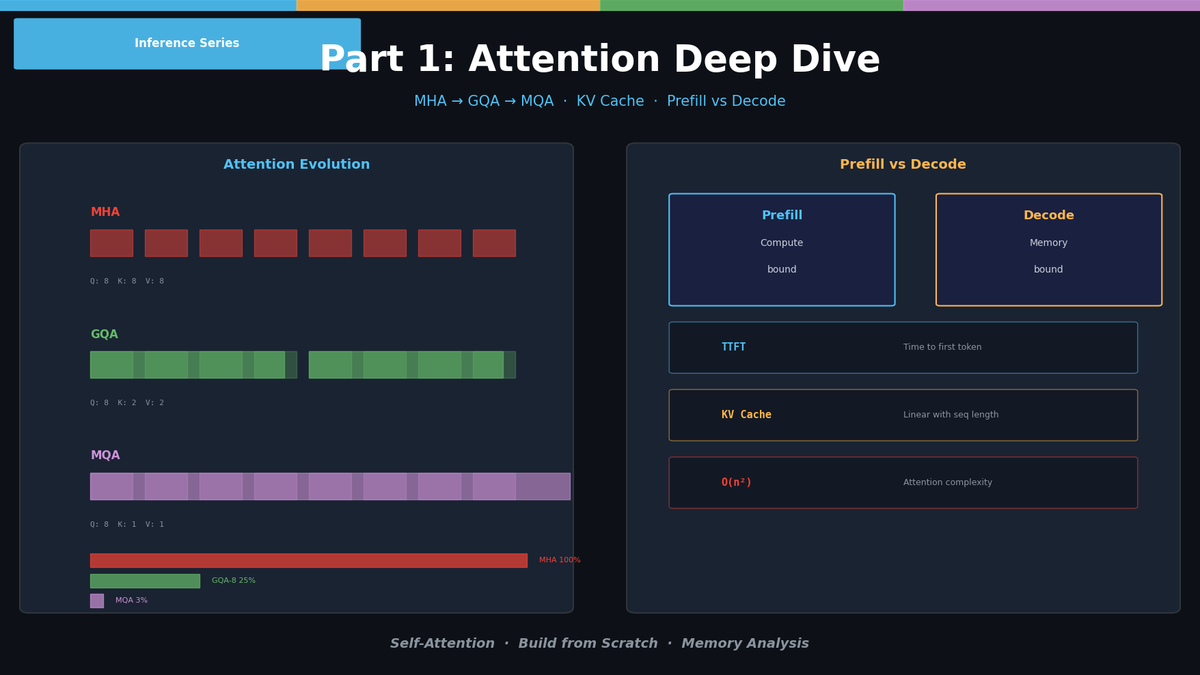
Build Self-Attention from scratch. Compare MHA → GQA → MQA evolution in code. KV Cache mechanics and Prefill vs Decode analysis.
LLM Inference Optimization Part 1 — Attention Mechanism Deep Dive
When you deploy an LLM to a production service, the first wall you hit is inference speed and memory. No matter how good the model is, it's useless if it's slow and expensive. In this series, we dissect the core bottlenecks of LLM inference one by one and cover practical optimization techniques with code.
In Part 1, we implement the Attention mechanism from scratch — the starting point of all optimizations — and compare the evolution from MHA to GQA to MQA directly in code.
Self-Attention — Implementing from Scratch
Basic Structure
Related Posts
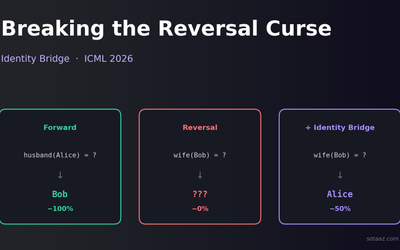
Breaking the Reversal Curse with Identity Bridges — the ICML 2026 fix that shouldn't work but does
LLMs trained on "Alice's husband is Bob" famously fail on "Bob's wife is?" — the reversal curse. A new ICML 2026 paper fixes it by adding one weird kind of self-referential example to the training set. The naive version doesn't work; the right version does.
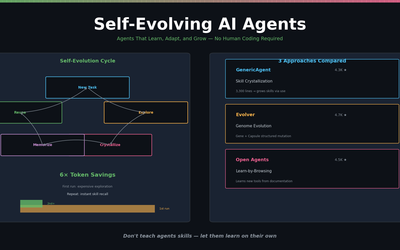
Self-Evolving AI Agents — The New Paradigm of 2026
GenericAgent, Evolver, Open Agents — comparing 3 self-evolving agent frameworks that learn, adapt, and grow without human coding.
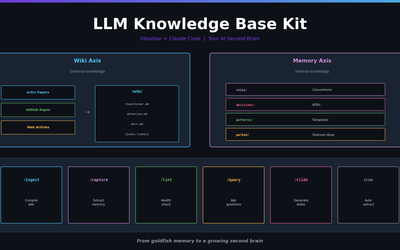
Build Your Own LLM Knowledge Base — A Karpathy-Style Knowledge System
Complete guide to building a permanent personal knowledge system with Obsidian + Claude Code. Wiki + Memory dual-axis architecture.