Learn AI by Building
From your first dataset to production agents — deep-dive series, hands-on notebooks, and experiments you can rerun yourself.
Paper of the Week
All Issues →Paper of the Week #8 — Agents Beat All 20 Science Benchmarks, and None of 135 Follow-up Papers Passed
This week's roundup. Agent4Sci reports that frontier agents beat human-verified baselines on all 20 scientific ML benchmarks it collected, mostly through engineering; Into the Unknown reports that none of 135 agent-written follow-up papers met every condition set by the scientists who posed the problems. Also: BizAgentBench, which grades goals and procedure separately on payment-company workflows, and CarryOn, which rebuilds an agent's context from what it has produced instead of its chat history.
Premium Series
Our Products
Courses and code built from what we measure here
Video Courses
13 hands-on courses — quantization, diffusion, RAG, on-device AI, decision models. $199 lifetime bundle, first 3 lectures of every course free
LLM Quantization and Compression Hands-On
GPTQ, AWQ, GGUF, QLoRA — fit LLMs into the memory you have. The course behind our KV-cache measurements
Free Benchmark Code
The scripts and raw results behind the measurement posts, starting with the KV cache harness. Free with an account
Premium Series
140 deep-dive posts across 21 series, bilingual KO/EN, with production-ready code and notebooks
Latest Posts
View All →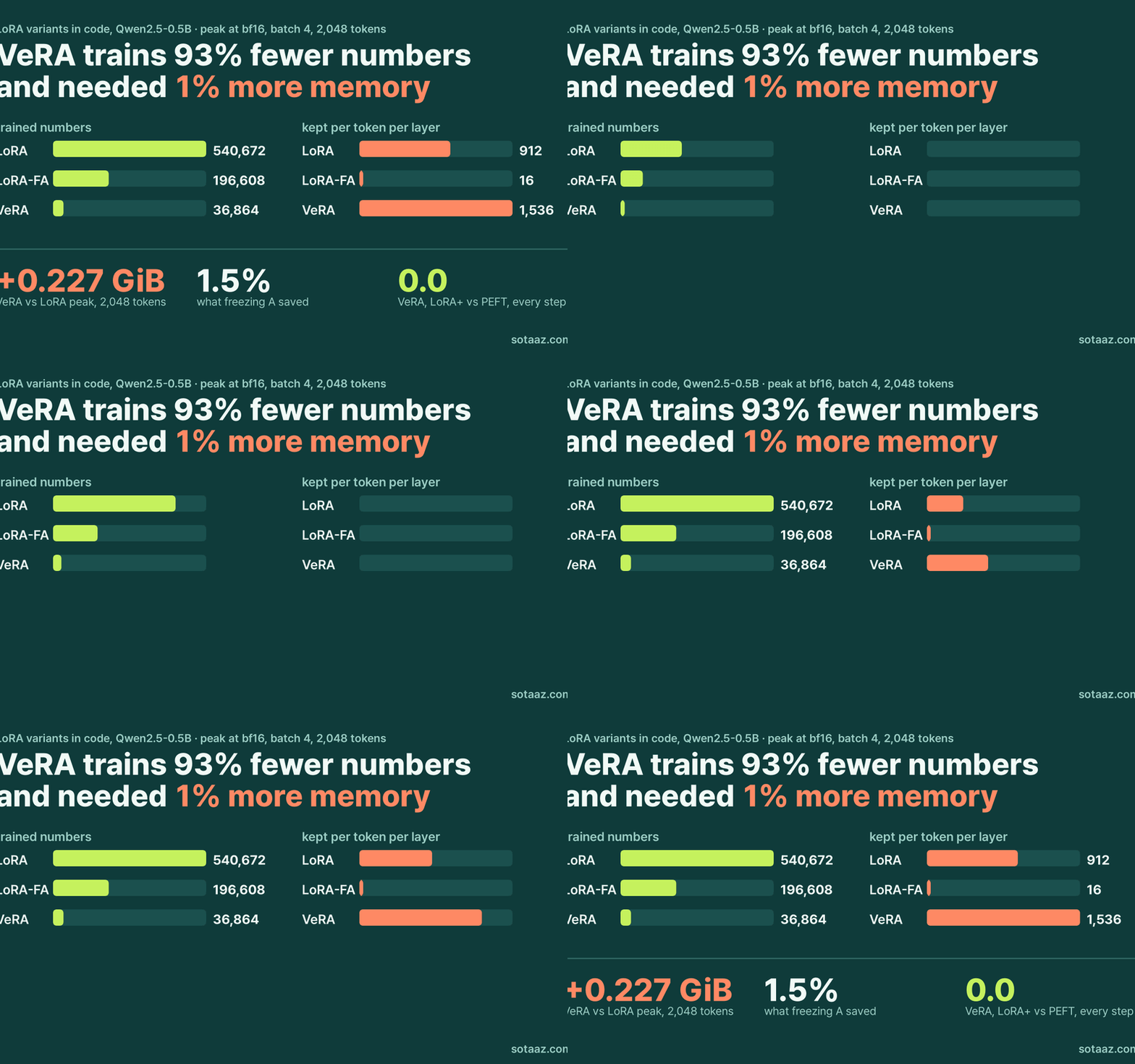
Four LoRA Variants in a Few Lines Each: VeRA Trained 93% Fewer Numbers and Needed Slightly More Memory
Turn a 19-line LoRA layer into LoRA-FA, LoRA+, VeRA and Delta-LoRA, check three of them against PEFT on Qwen2.5-0.5B, and measure what each keeps on the GPU. VeRA trains 36,864 numbers against LoRA's 540,672 and still needs more activation memory: +0.227 GiB at 2,048 tokens, about 1% of the peak.
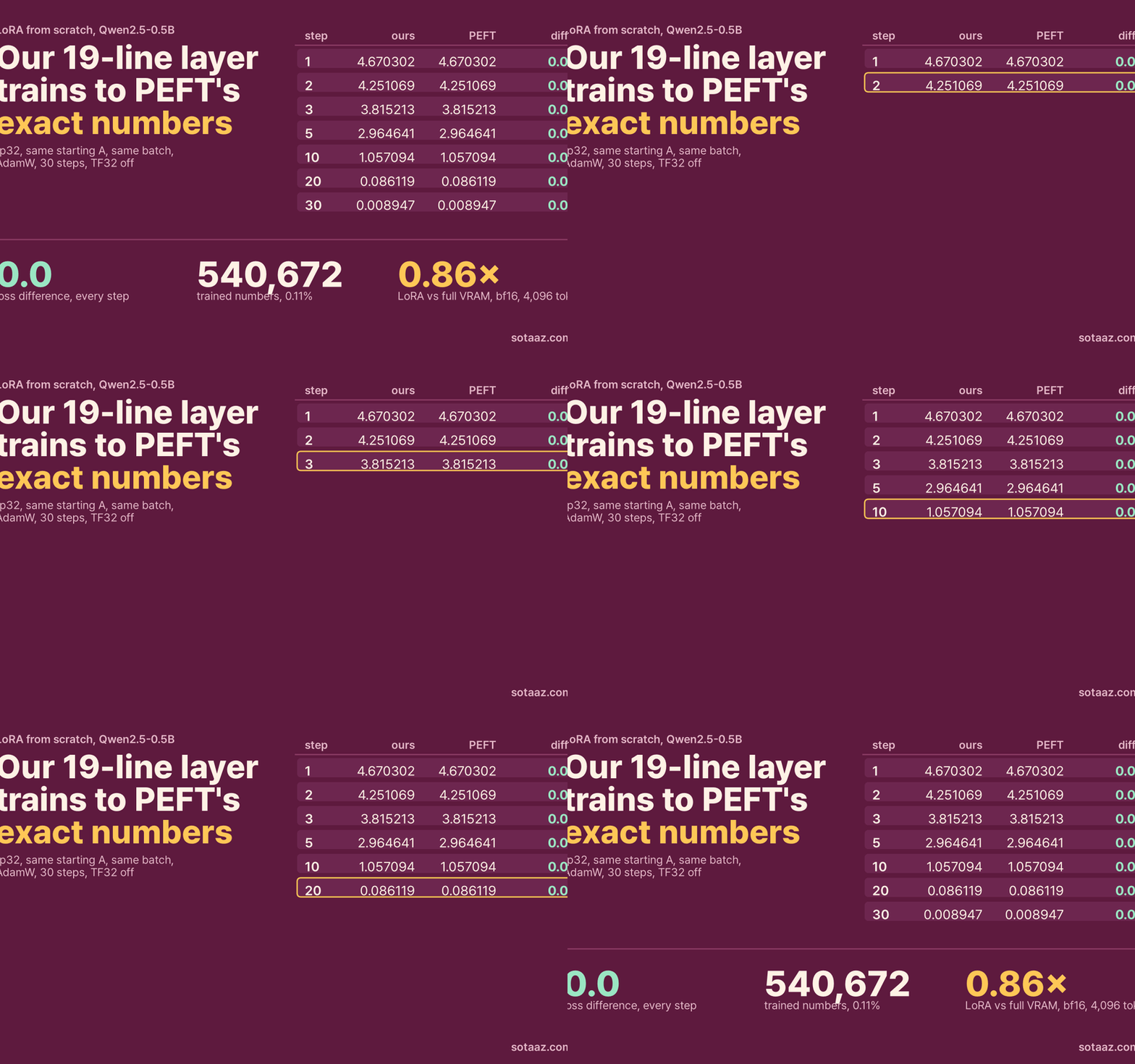
LoRA From Scratch in 19 Lines: It Matches PEFT Exactly, and Saved Less Memory Than We Predicted
Build a LoRA layer in PyTorch, put it into Qwen2.5-0.5B and check it against PEFT: identical outputs and identical training for 30 steps. Then measure what it saves on the GPU: 34% of peak memory at 512 tokens in fp32, not the half we predicted.
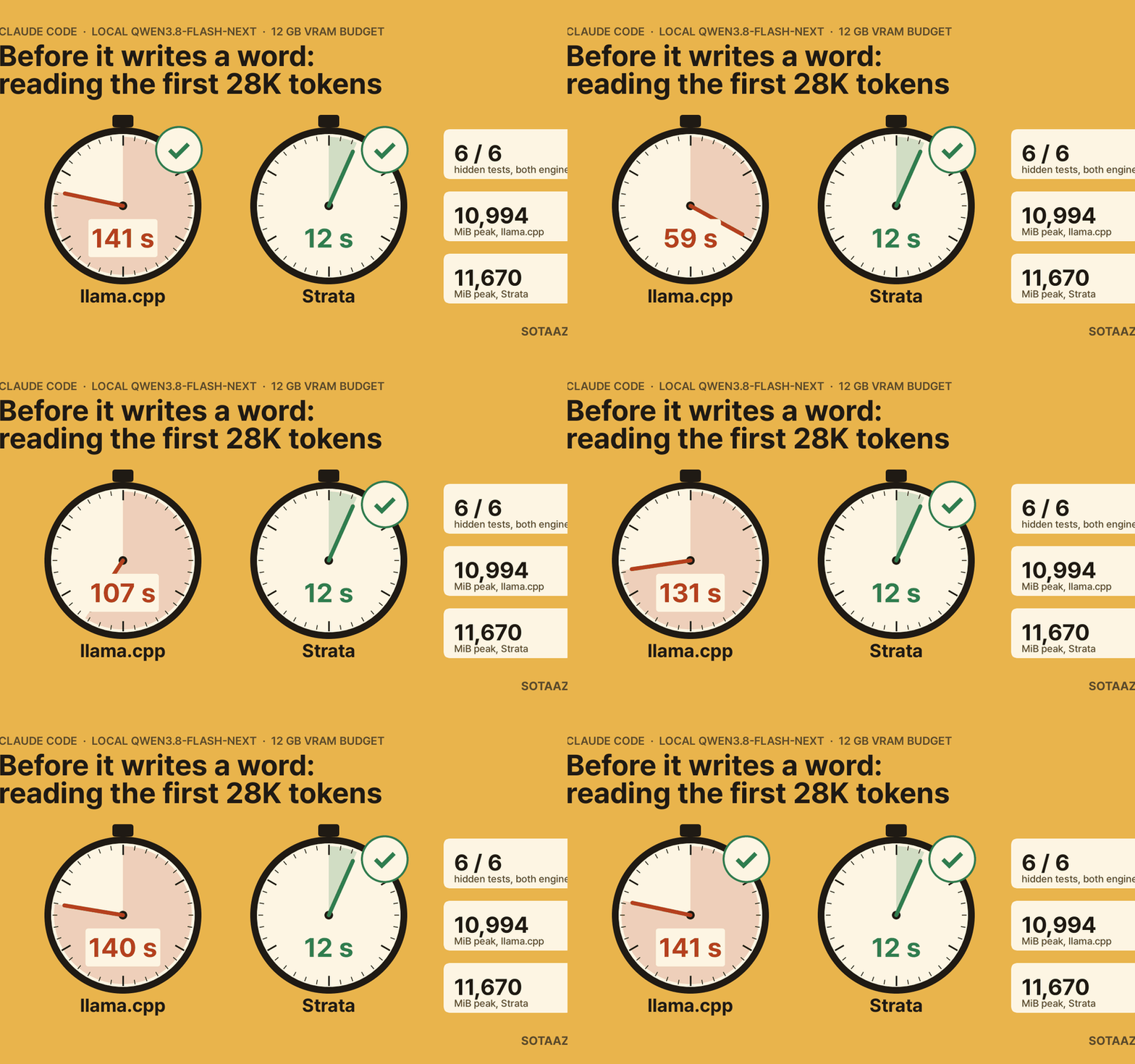
Claude Code on a Local Qwen3.8-Flash-Next on a 12 GB GPU Budget: llama.cpp or Strata
Point Claude Code at a local Qwen3.8-Flash-Next held to 12 GB of VRAM by changing a few environment variables, with llama.cpp or Strata. Reading the roughly 28K-token first request took llama.cpp 139-161 s and Strata about 12 s. Strata refuses every request once the conversation passes about 33,500 tokens because of Claude Code's 32,000-token output cap, so set CLAUDE_CODE_MAX_OUTPUT_TOKENS=8192 with it.
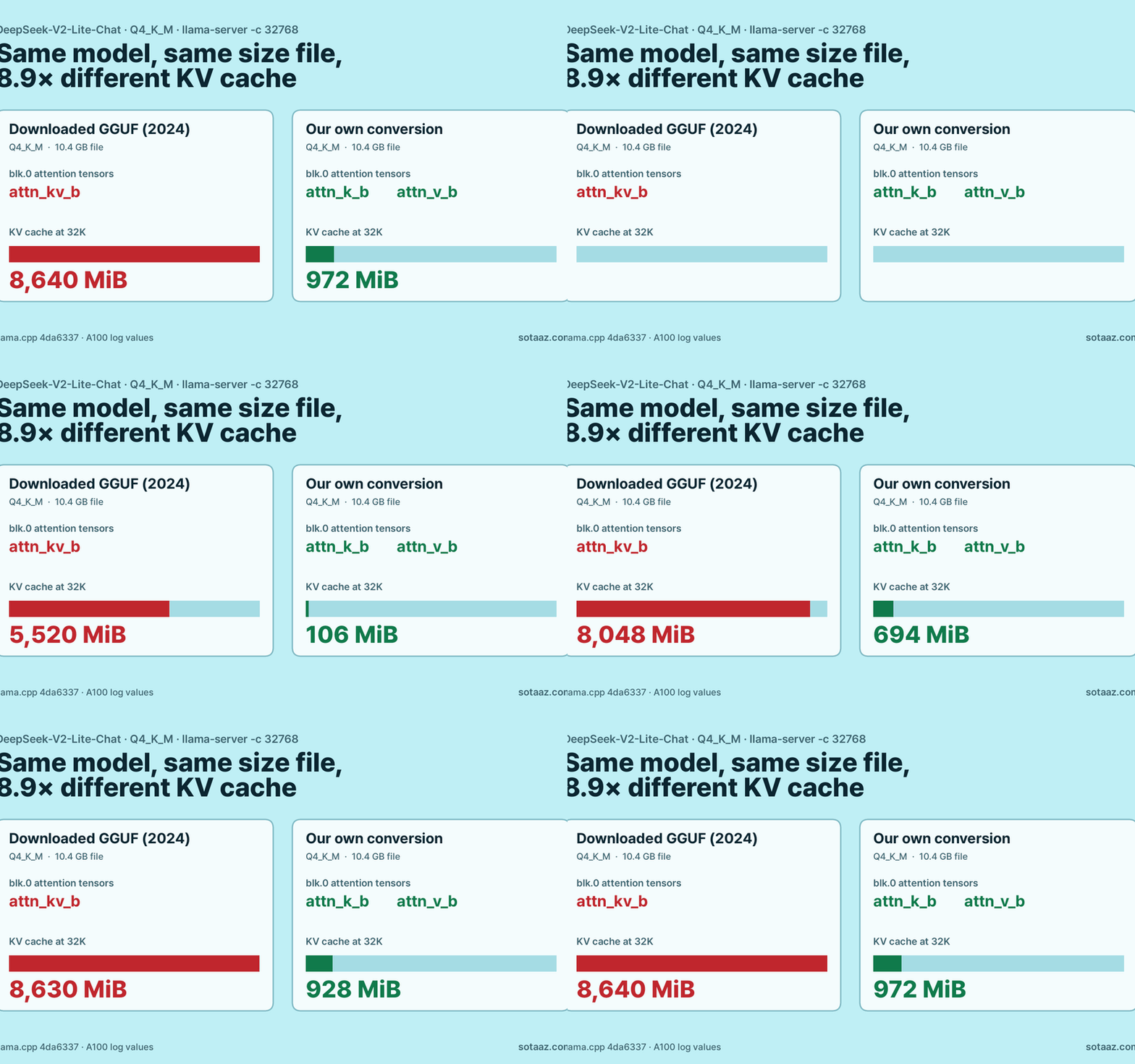
The DeepSeek-V2-Lite GGUF We Downloaded Ran Without Its Small KV Cache: Check Two Tensor Names First
DeepSeek-V2-Lite's attention should keep a 32K-token KV cache at 972 MiB in llama.cpp. The 2024 Q4_K_M GGUF we downloaded used 8,640 MiB because it lacks the attn_k_b and attn_v_b tensors. Converting the original weights ourselves brought the cache back to 972 MiB and the process from 20,162 to 11,330 MiB. Here is how to check a file in one command and convert it if needed.
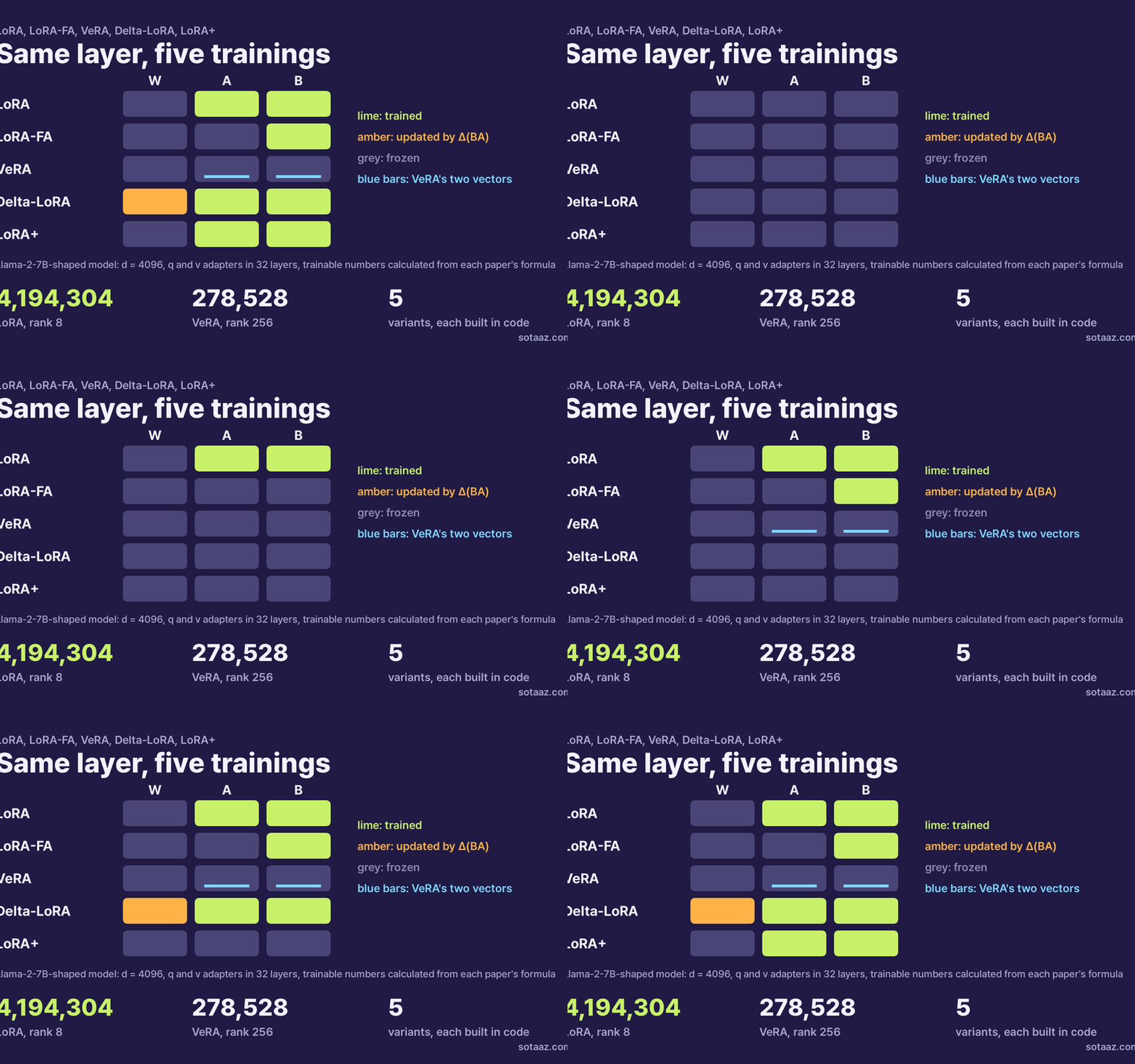
Five LoRA Variants on One Table, and the Setting or Condition Each Abstract Leaves Out
LoRA, LoRA-FA, VeRA, Delta-LoRA and LoRA+ on one table: which of W, A and B each trains, where each paper says the saving is, and the setting or condition you only find past the abstract.
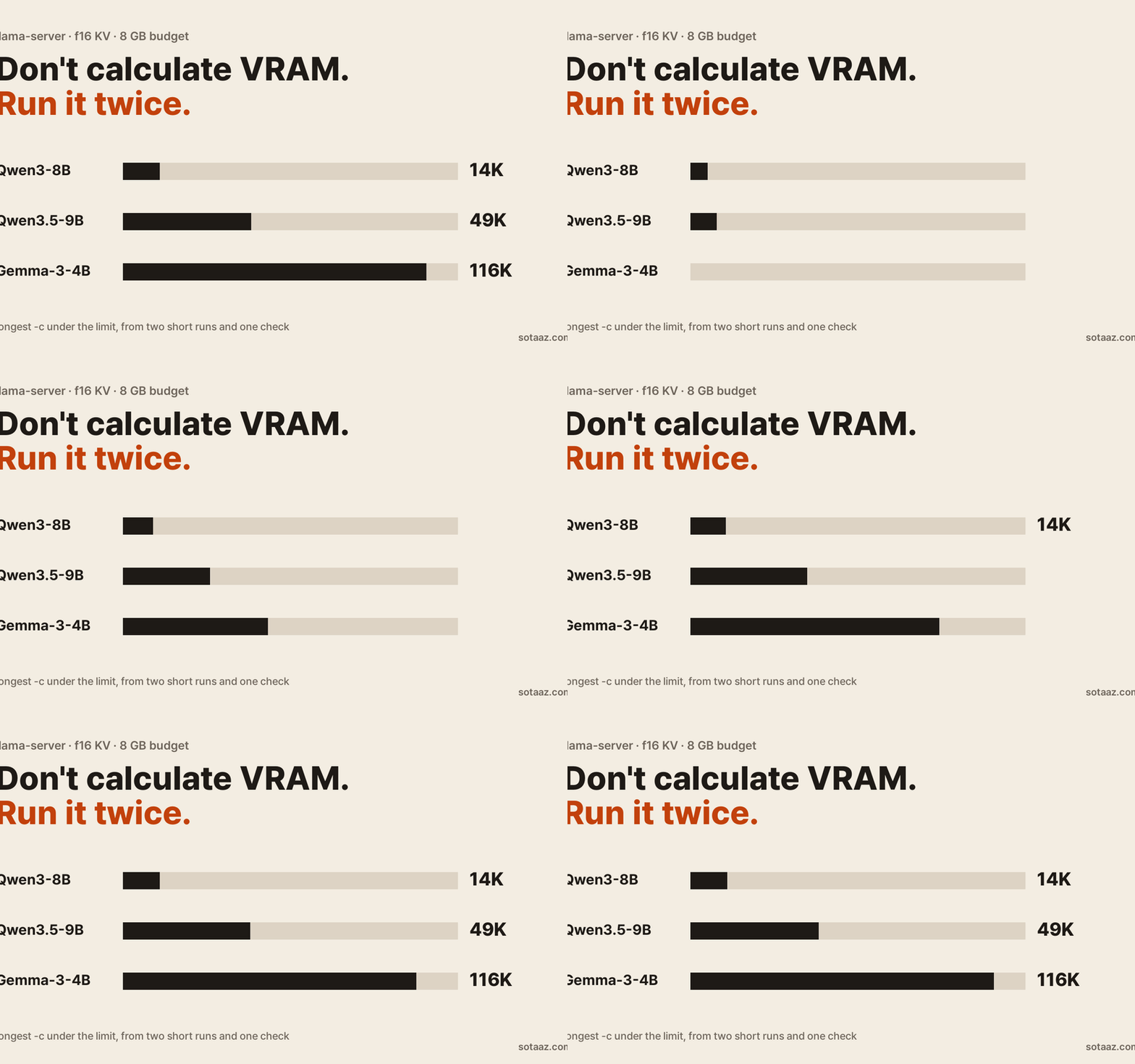
Pick llama-server's -c From Two Short Runs, Not a VRAM Estimate: Load Memory Within 1 MiB at Seven Checked Lengths, and the Estimate Overshot Gemma 3 at 128K by 13.7 GiB
We started llama-server at 4K and 8K on Qwen3-8B, Qwen3.5-9B and Gemma 3 4B, drew a line through the two memory readings, and picked the longest -c under a memory budget. At the seven lengths we then started, the line predicted load memory within 1 MiB. Prompt processing added 12 to 14 MiB and pushed two picks over budget, so we subtract 16 MiB more. A simple all-layers estimate overshot Gemma 3 at 128K by 13.7 GiB.