DiT: Replacing U-Net with Transformer Finally Made Scaling Laws Work (Sora Foundation)
U-Net shows diminishing returns when scaled up. DiT improves consistently with size. Complete analysis of the architecture behind Sora.
DiT: Diffusion Transformer - A New Paradigm Beyond U-Net
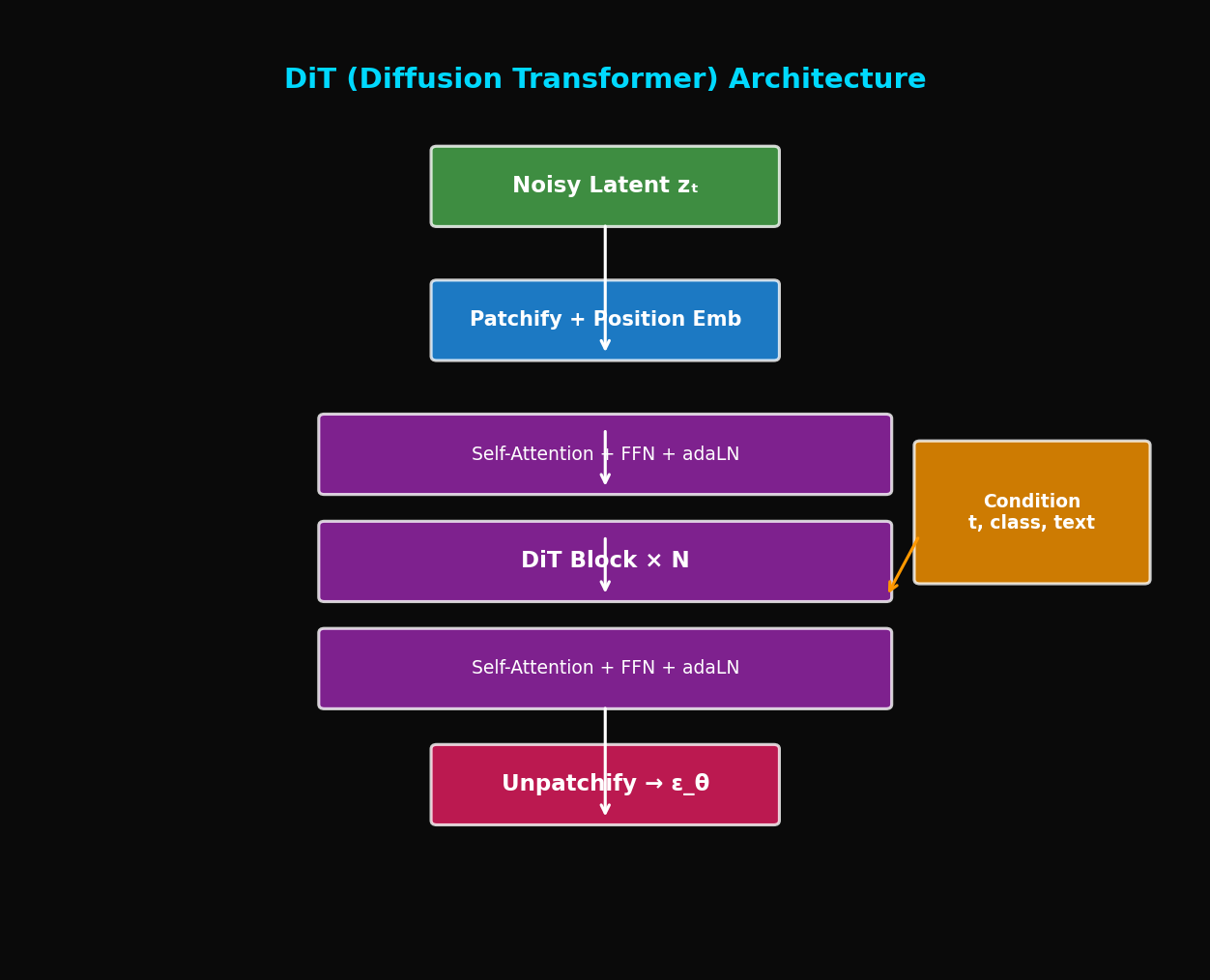
TL;DR: DiT replaces the Diffusion model's backbone from U-Net to Vision Transformer. Scaling laws apply, so performance consistently improves as the model grows larger. It's the foundation technology behind Sora.
1. Limitations of U-Net
1.1 Why U-Net?
🔐
This part is for subscribers
A subscription unlocks every premium series and its Jupyter notebooks.
You need a free account to subscribe. Cancel anytime.
Related Posts
Models & Algorithms
SANA: O(n²)→O(n) Linear Attention Generates 1024² Images in 0.6 Seconds
How Linear Attention solved Self-Attention quadratic complexity. The secret behind 100x faster generation compared to DiT.
Models & Algorithms
PixArt-α: How to Cut Stable Diffusion Training Cost from $600K to $26K
23x training efficiency through Decomposed Training strategy. Making Text-to-Image models accessible to academic researchers.
Models & Algorithms
From 512×512 to 1024×1024: How Latent Diffusion Broke the Resolution Barrier
How Latent Space solved the memory explosion problem of pixel-space diffusion. Complete analysis from VAE compression to Stable Diffusion architecture.