DeerFlow 2.0 Multi-Agent Workflow Deep Dive — StateGraph, Plan-Execute, Human-in-the-Loop
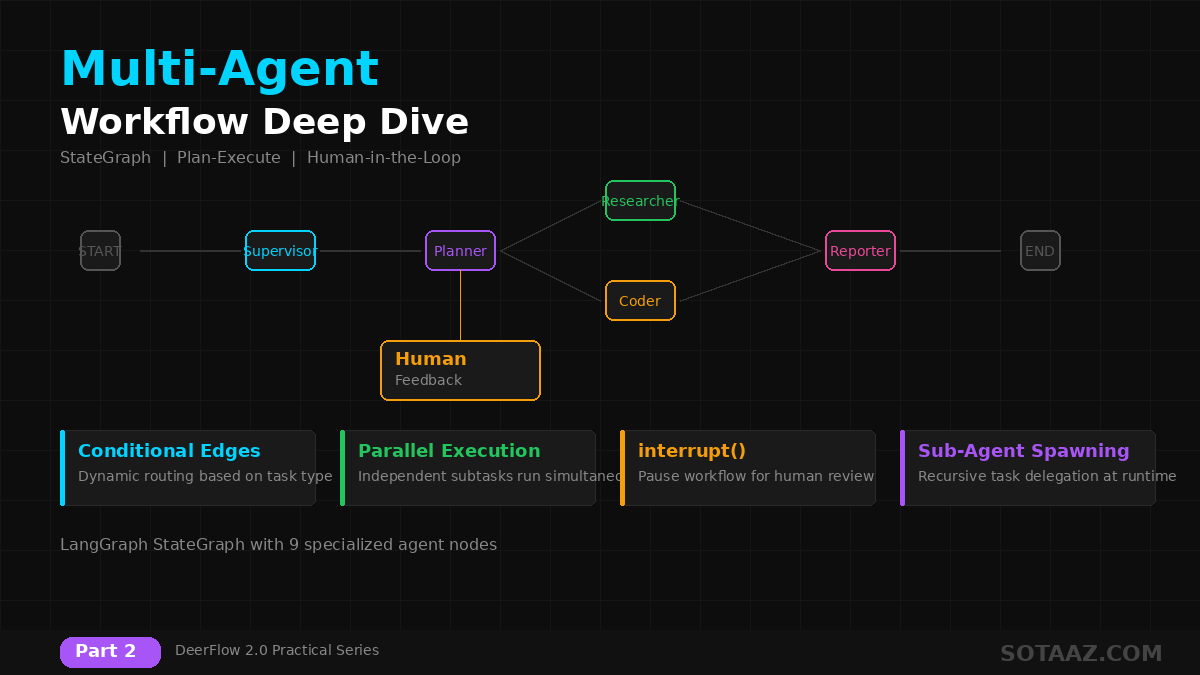
Code-level analysis of DeerFlow's LangGraph StateGraph-based Multi-Agent Workflow. Supervisor routing, Plan-Execute pattern, and dynamic sub-agent spawning.
DeerFlow 2.0 Multi-Agent Workflow Deep Dive — StateGraph, Plan-Execute, Human-in-the-Loop
In Part 1, we covered DeerFlow's architecture and installation. This post analyzes DeerFlow's core: the Multi-Agent Workflow at the code level.
We'll examine how DeerFlow decomposes complex tasks, delegates to agents, and synthesizes results.
1. LangGraph StateGraph Fundamentals
DeerFlow's workflow is built on LangGraph StateGraph.
Related Posts
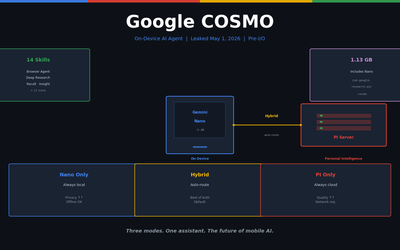
Inside Google COSMO — The New Architecture of On-Device AI Agents
Deep-dive into COSMO, Google's next-gen AI assistant accidentally leaked before I/O 2026. Full breakdown of the 3-mode architecture: Gemini Nano + PI server + Hybrid routing.
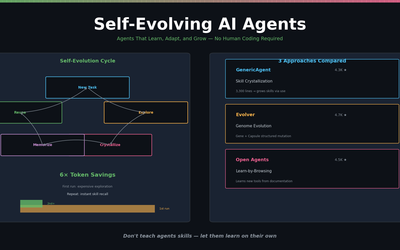
Self-Evolving AI Agents — The New Paradigm of 2026
GenericAgent, Evolver, Open Agents — comparing 3 self-evolving agent frameworks that learn, adapt, and grow without human coding.
Fine-tuning Gemma 4 MoE — Customizing Arena #6 with 3.8B Active Parameters
Apply QLoRA to Gemma 4 26B MoE. Expert layer LoRA strategies, Dense vs MoE comparison, MoE-specific training tips, and Ollama deployment. LoRA Series Part 4.